Hazmat cleanup vs biohazard cleanup: which service do you need
Hazmat cleanup handles chemical and industrial hazards; biohazard cleanup handles blood, bodily fluids, and infectious material. Here is how to tell which one you need.
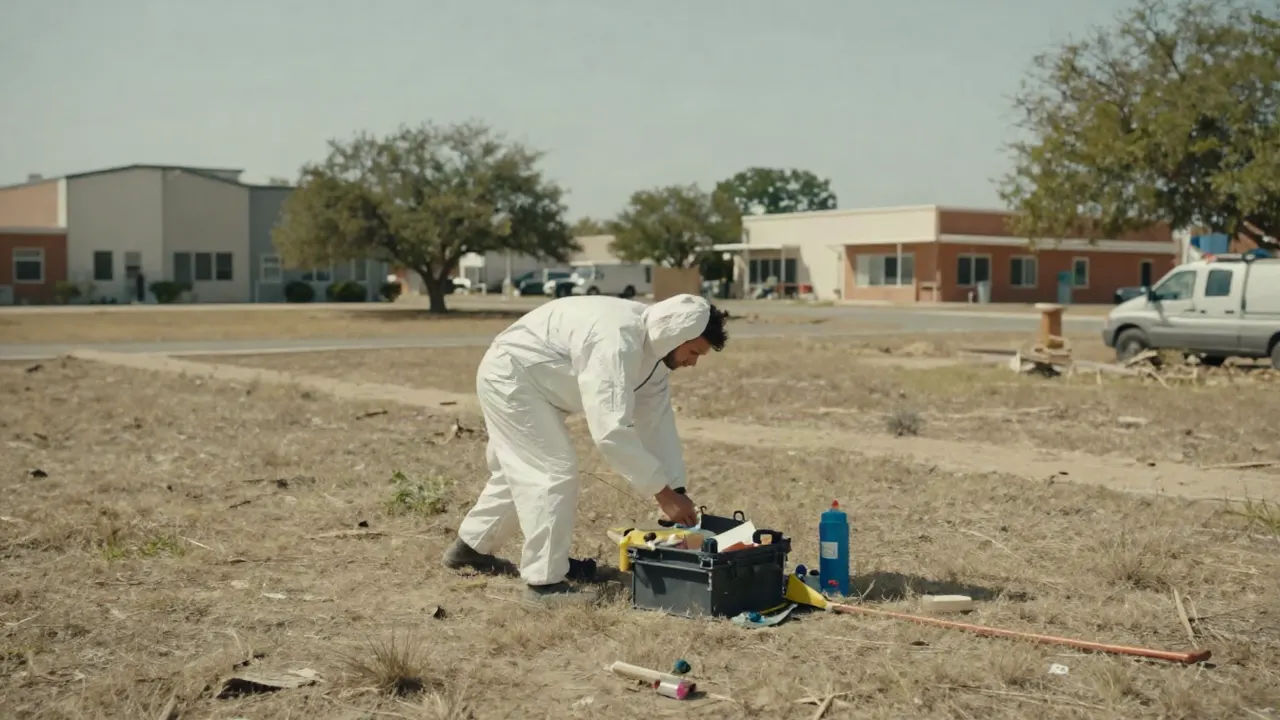
Hazmat cleanup vs biohazard cleanup: which service do you need? If the hazard is a chemical, fuel, industrial solvent, or unknown substance, you need hazmat cleanup. If it involves blood, bodily fluids, tissue, or anything that can carry an infectious disease, you need biohazard cleanup. That is the whole answer in two sentences. The rest of this post explains how we tell them apart in the field, what each job actually involves, and how to decide which call to make when you are standing in front of a mess in Naval Air Station JRB, Texas.
We run both types of jobs through TraumaShield Pros, and the two get confused constantly. A homeowner finds a red-stained puddle in the garage and assumes blood. A landlord finds a spilled jug of pool chlorine and assumes hazmat. Sometimes they are right. Often they are not, and the wrong assumption costs money or creates a real safety problem.
The short answer: hazmat vs biohazard cleanup
Hazmat cleanup vs biohazard cleanup comes down to the source of the danger. Hazmat cleanup removes chemical, radiological, or physical hazards that can burn, poison, or explode. Biohazard cleanup removes biological hazards that can infect. The overlap is smaller than most people think, but it is real: a meth lab has both, and so does a hoarding situation with spoiled food and animal waste.
Here is the cleanest way to sort it:
- Hazmat: gasoline, diesel, antifreeze, pool chemicals, industrial solvents, mercury, asbestos, lead paint dust, unknown powders or liquids.
- Biohazard: blood, vomit, urine, feces, decomposition fluid, sewage backflow, used needles, medical waste.
- Both: unattended deaths where medication or chemicals are present, hoarding with pest infestation and chemical cleaners, industrial accidents with bodily injury and a chemical release.
If you cannot identify the substance, treat it as hazmat until a professional tests it. That is not caution for its own sake. A clear liquid in an unlabeled bottle can be water or it can be hydrofluoric acid, and the difference matters at the first touch.
What is the difference between hazmat and biohazard cleanup?
The difference between hazmat and biohazard cleanup is the hazard class, the protective equipment, and the disposal chain. Hazmat techs wear chemical-resistant suits rated for the specific substance and use absorbents, neutralizers, and ventilation. Biohazard techs wear fluid-resistant suits, respirators, and eye protection, and they disinfect to a standard that kills bloodborne pathogens.
Disposal is where the two really split. Chemical waste goes to a permitted hazardous waste facility. Biohazard waste goes into regulated medical waste containers and is incinerated or autoclaved. You cannot put either in a curbside bin, and you cannot mix them in the same truck.
We get asked about this constantly by property managers around the base, and the honest answer is that most residential jobs are biohazard, not hazmat. Blood from a nosebleed, a pet accident, a sewage backup, a deceased pet under the house - those are biohazard jobs. Hazmat calls in this area are usually smaller: a spilled gas can in the garage, a broken thermometer, a jug of pool shock that cracked in the shed.
For a deeper look at how we handle the biological side, including the disinfection steps and the waste manifest, see our page on biohazard remediation Naval Air Station JRB.
Which cleanup service do I need for a chemical spill in Naval Air Station JRB?
For a chemical spill in Naval Air Station JRB, you need hazmat cleanup unless the spilled material is a known, low-hazard household product in a small quantity. A quart of bleach on the garage floor is a mop job. A gallon of gasoline that soaked into drywall is a hazmat job. The line is volume, ventilation, and what the chemical can do to you.
Call hazmat if any of these are true:
- The container is unlabeled or the label is unreadable.
- The spill is more than about a quart of a solvent, fuel, or pesticide.
- There is visible vapor, a strong odor, or anyone in the home is coughing, dizzy, or nauseated.
- The liquid soaked into carpet, drywall, subfloor, or soil.
- The spill is mercury, asbestos, or lead-containing dust.
Call biohazard instead if the spill came from a body. Blood, vomit, and feces carry pathogens even when they look diluted. A sewage backup in a Naval Air Station JRB home is a biohazard job, not a plumbing job, once the water is out.
We handle both through our Hazmat Cleanup in Naval Air Station JRB, Texas service, and we test unknown substances before we touch them. If you are not sure which side of the line you are on, call and describe what you see. We will tell you straight.
When to call hazmat vs biohazard cleanup in Naval Air Station JRB Texas
When to call hazmat vs biohazard cleanup in Naval Air Station JRB Texas depends on what is in the space and who is at risk. Call hazmat when the air is unsafe to breathe, when the substance can burn or poison, or when you cannot identify it. Call biohazard when the risk is infection and the source is biological.
We see a seasonal pattern here. In spring and summer, we get more hazmat calls for pool chemicals and lawn pesticides stored in hot garages. In fall and winter, the calls shift to biohazard: sewage backups from heavy rain, rodent and pest waste in attics, and hoarding situations that get worse when the house is closed up.
Some jobs are clearly one or the other. Some are not. A few examples from our own work:
- A detached garage in White Settlement with a cracked gas can and a stained concrete floor: hazmat, about a half-day job.
- A rental near Lake Worth with a sewage backup that reached the hallway carpet: biohazard, two days including dry-out.
- A hoarded home in Sansom Park with animal waste, spoiled food, and a shelf of old pesticides: both, handled as a single scope.
If you are in one of the neighborhoods just outside the base, we cover the area. See our Biohazard Cleanup in NAS JRB Fort Worth page for the coverage map and response times.
Is hazmat cleanup more expensive than biohazard cleanup in Naval Air Station JRB?
Hazmat cleanup is usually more expensive than biohazard cleanup in Naval Air Station JRB because of testing, specialized suits, and hazardous waste disposal fees. Typical 2026 pricing here runs $400 to $1,200 for a small biohazard job and $1,000 to $4,500 for a hazmat job of similar square footage.
The spread comes from three things:
- Testing. Unknown substances need lab analysis before disposal. That adds $150 to $400 per sample and 24 to 72 hours.
- Disposal. Hazardous waste is billed by weight and class. Biohazard waste is billed by container. Neither is cheap, but hazmat is less predictable.
- Labor. A hazmat job often needs two techs in Level B or C suits with air monitoring. A biohazard job of the same size might need one tech and a sprayer.
What drives cost more than the category is access. A spill in a garage is simple. A spill under a sink, behind a wall, or in a crawlspace with 18 inches of clearance takes longer and costs more. We quote after we see it, and we tell you the number before we start.
One more cost note: many homeowner policies cover biohazard cleanup after a sewage backup or a death in the home, and some cover chemical spills if they were accidental. We document the job with photos and a written scope so your adjuster has what they need.
Common mistakes we see on cleanup jobs
The most common mistake is treating a biohazard like a cleaning job. A mop, bleach, and a fan do not remove bloodborne pathogens from grout, subfloor, or drywall. Bleach kills what it touches on a clean surface. It does not penetrate porous material, and it does not reach the fluid that soaked into the pad under the carpet.
Other mistakes we run into:
- Mixing chemicals. Bleach plus ammonia makes chloramine gas. We have walked into homes where a well-meaning homeowner created a breathing hazard trying to clean up a pet accident.
- Bagging hazmat as trash. Putting a soaked rag or a broken thermometer in the kitchen bin is illegal in Texas and can get a hauler fined.
- Ignoring the HVAC. If a spill happened near a return vent, the contamination is in the ductwork. Cleaning the floor does not fix the air.
- Waiting. Biohazard contamination spreads. A small blood spill on carpet becomes a subfloor job in 48 hours if the pad stays wet.
- Assuming insurance will not cover it. Many policies do. Call your adjuster before you assume.
If the job involves a death, the scene is handled differently. We cover that in our Unattended Death Cleanup in Naval Air Station JRB, Texas page, including how we coordinate with the medical examiner and the family.
When to call a professional
Call a professional when the hazard is beyond a mop and a pair of gloves. That means any blood or bodily fluid on a porous surface, any chemical you cannot identify, any spill larger than a quart of a solvent or fuel, and any situation where the smell has moved into the walls or the HVAC.
At TraumaShield Pros, we handle both hazmat and biohazard cleanup in Naval Air Station JRB and the surrounding neighborhoods. We test what we cannot identify, we dispose of waste through permitted channels, and we leave the space safe to occupy. If you are not sure which service you need, call us and describe the scene. We will tell you what we would do if it were our own house.
Frequently Asked Questions
What is the difference between hazmat cleanup and biohazard cleanup?
Hazmat cleanup removes chemical, radiological, or physical hazards like fuel, solvents, mercury, and asbestos. Biohazard cleanup removes infectious material like blood, bodily fluids, sewage, and medical waste. The two use different protective gear, different cleaning methods, and different disposal chains, which is why one company rarely handles both without the right certifications.
Which service do I need for a chemical spill in Naval Air Station JRB Texas?
You need hazmat cleanup for any chemical spill larger than about a quart, any unlabeled substance, and anything that soaked into carpet, drywall, or soil. A small spill of a known household product on a hard surface is a mop job. When in doubt, call and describe it. Testing takes 24 to 72 hours and costs $150 to $400 per sample.
Is hazmat cleanup more expensive than biohazard cleanup in Naval Air Station JRB?
Yes, usually. In 2026, small biohazard jobs here run $400 to $1,200, while comparable hazmat jobs run $1,000 to $4,500. The difference comes from lab testing, specialized suits, and hazardous waste disposal fees billed by weight and class. Access and square footage affect the price more than the category does.
Can one company do both hazmat and biohazard cleanup in Naval Air Station JRB Texas?
Yes, if the company holds the right certifications and disposal accounts. TraumaShield Pros handles both. We test unknown substances, use the correct protective equipment for each hazard class, and route waste to permitted facilities. Mixing the two waste streams in one truck is illegal, so the disposal side has to be set up correctly from the start.
How do I know if I need hazmat or biohazard cleanup in Naval Air Station JRB?
Ask one question: can it infect you, or can it poison or burn you? If it can infect, it is biohazard. If it can poison, burn, or explode, it is hazmat. If you cannot identify it, treat it as hazmat until a professional tests it. We make that call on site at no charge when you call us first.
Get help with Biohazard Cleanup in Naval Air Station JRB
Whether you are looking at a chemical spill in the garage or a biohazard situation inside the home, we can tell you which service you need and handle it the same day. We serve Naval Air Station JRB and the surrounding communities, and we answer the phone 24/7.
Call TraumaShield Pros at (713) 804-9653 and describe what you are seeing. We will give you a straight answer and a clear price before we start.