Blood Cleanup
Blood Cleanup in Naval Air Station JRB, Texas Done Right
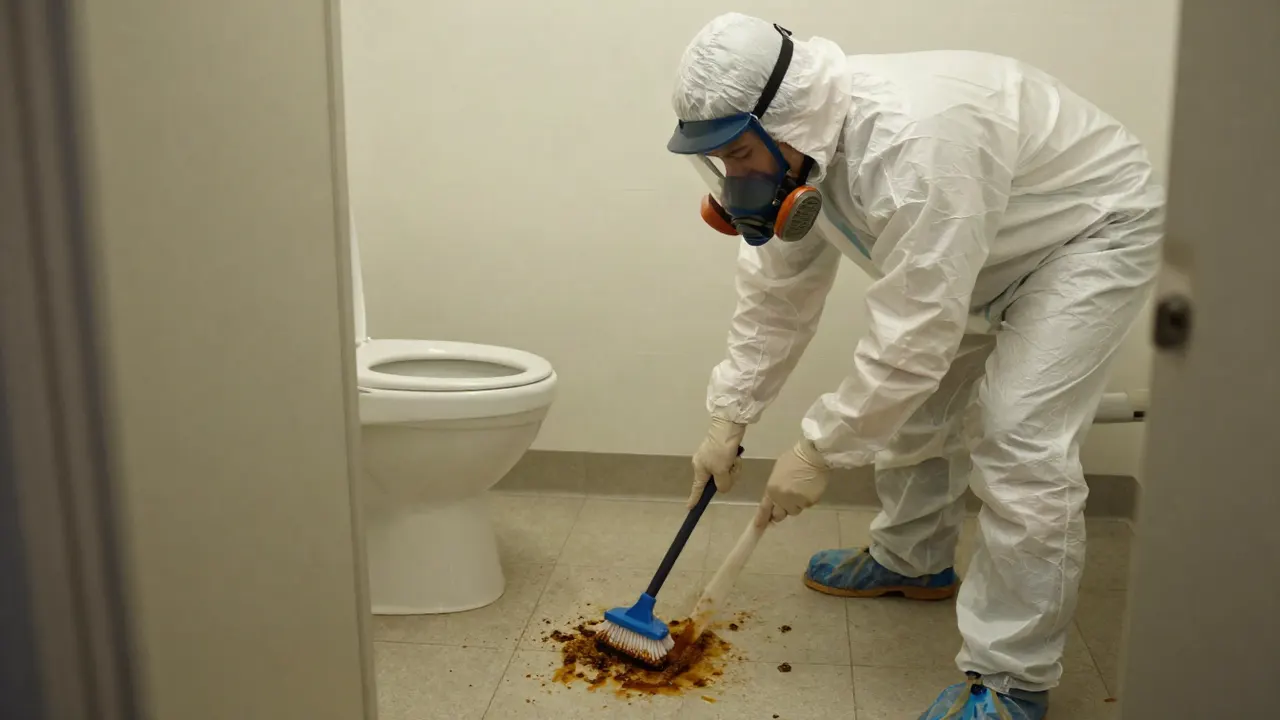
Blood Cleanup in Naval Air Station JRB, Texas is a biohazard remediation service that removes blood, bodily fluids, and contaminated materials from homes, vehicles, and businesses. TraumaShield Pros has handled these scenes since 2022. We arrive in unmarked trucks, work quietly, and leave the space safe to occupy. If you are dealing with a blood spill cleanup Naval Air Station JRB situation right now, call (713) 804-9653 and we will walk you through what happens next.
Service overview
What Blood Cleanup in Naval Air Station JRB, Texas Involves
Blood is not a stain problem. It is a biohazard. Bloodborne pathogens like hepatitis B, hepatitis C, and HIV can survive in dried blood for days, and porous materials such as carpet padding, subfloor, and drywall wick fluid well past what the eye can see. Our crews treat every job under the OSHA Bloodborne Pathogens Standard (29 CFR 1910.1030), which means full PPE, regulated waste handling, and documented disposal. We do not just wipe a surface and call it clean.
Most calls we take in this area come from three places: a home accident, a vehicle after a medical emergency, or a rental unit where a tenant left a mess behind. Blood spill cleanup Naval Air Station JRB requests often come in at night or on a weekend, which is why we run 24/7. If you are searching for affordable blood spill cleanup near me Naval Air Station JRB, the honest answer is that price depends on square footage, surface type, and how long the blood sat before anyone called.
Practical benefits
Why Homeowners and Property Managers Call Us
Blood cleanup is not a mop-and-bleach job. Here is what you actually get when you hire a certified crew instead of handling it yourself.
Pathogen-Free, Verified
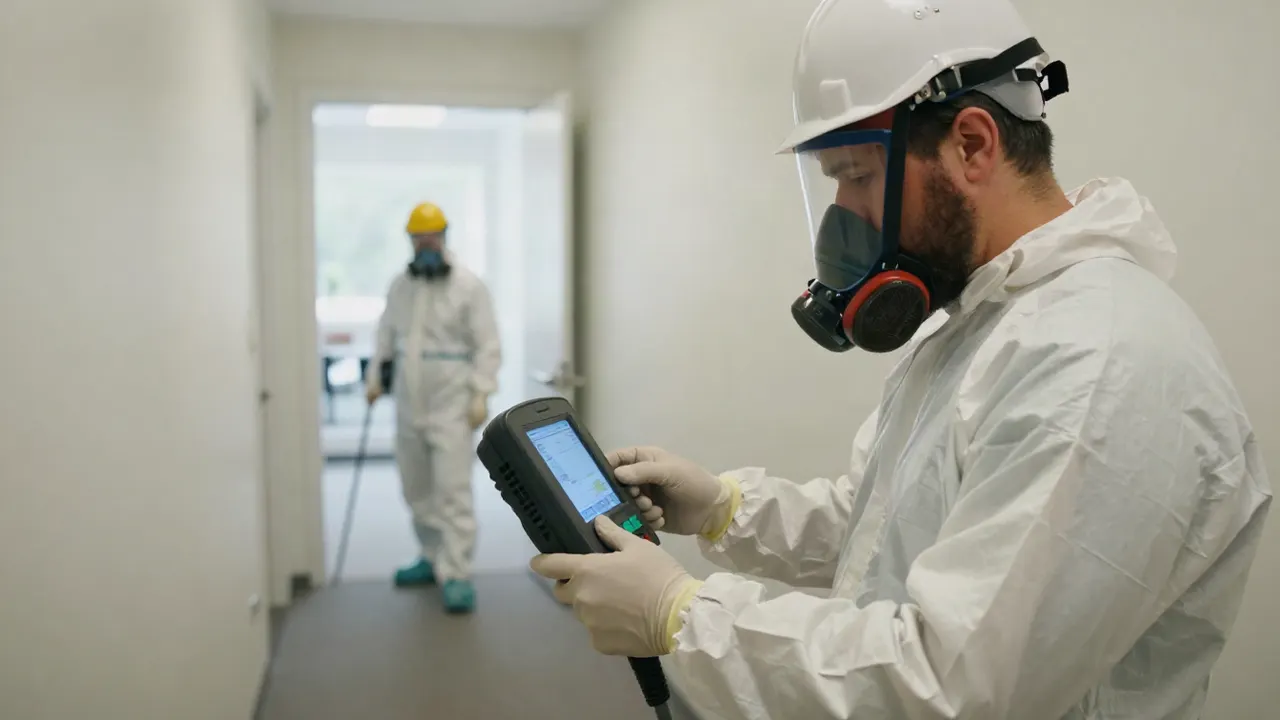
We do not guess whether a surface is clean. After extraction and disinfection, we verify with ATP meters that read organic residue down to the microscopic level. If a reading comes back hot, we re-treat before we pack up. That is the difference between a surface that looks clean and one that is actually safe for your family to touch.
Unmarked Trucks, No Neighbors
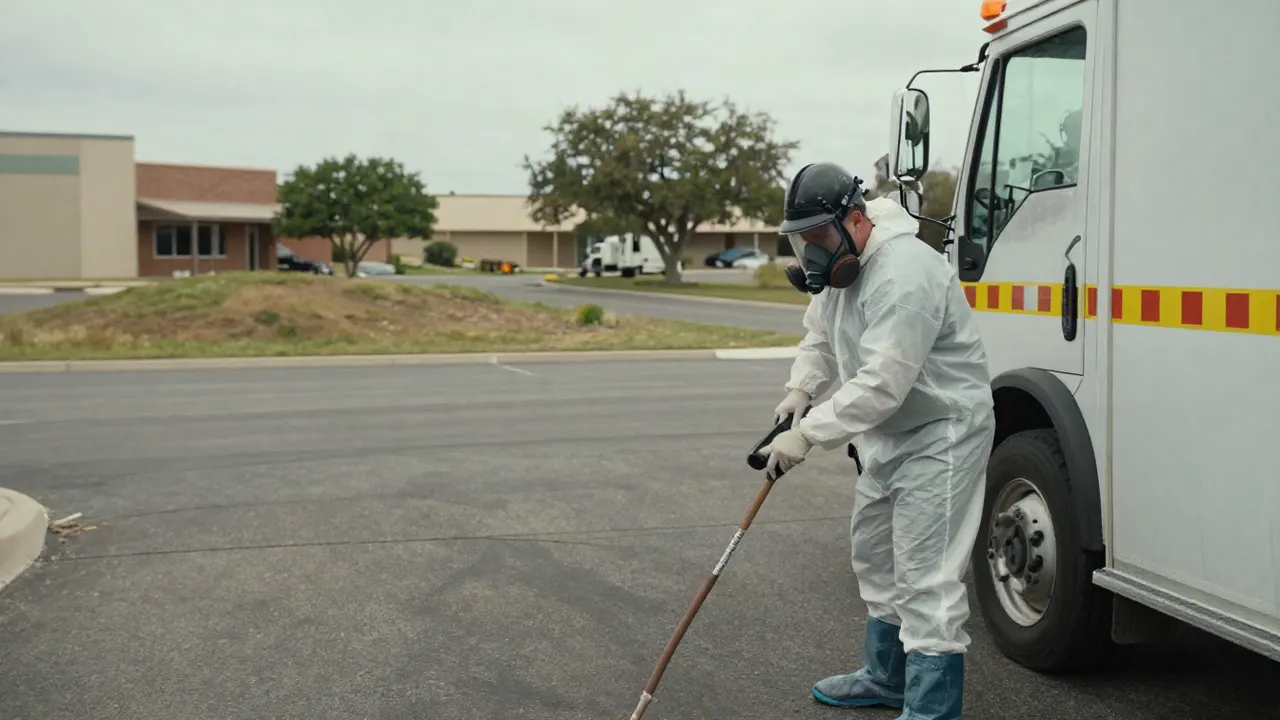
Our vehicles carry no branding. Techs wear plain uniforms and park where you ask. For a Naval Air Station JRB blood cleanup services call at a rental property or a shared driveway, discretion is not a nice-to-have. It is part of the job. We work quietly, and we do not discuss the scene with anyone but you.
Insurance Paperwork Handled
Most homeowner policies cover sudden blood cleanup, and many renters policies do too. We document the scene with photos, itemize affected materials, and provide a scope of work your adjuster can process. You get a clean file, not a fight. We have worked enough claims to know what adjusters ask for before they ask for it.
Odor Gone, Not Masked
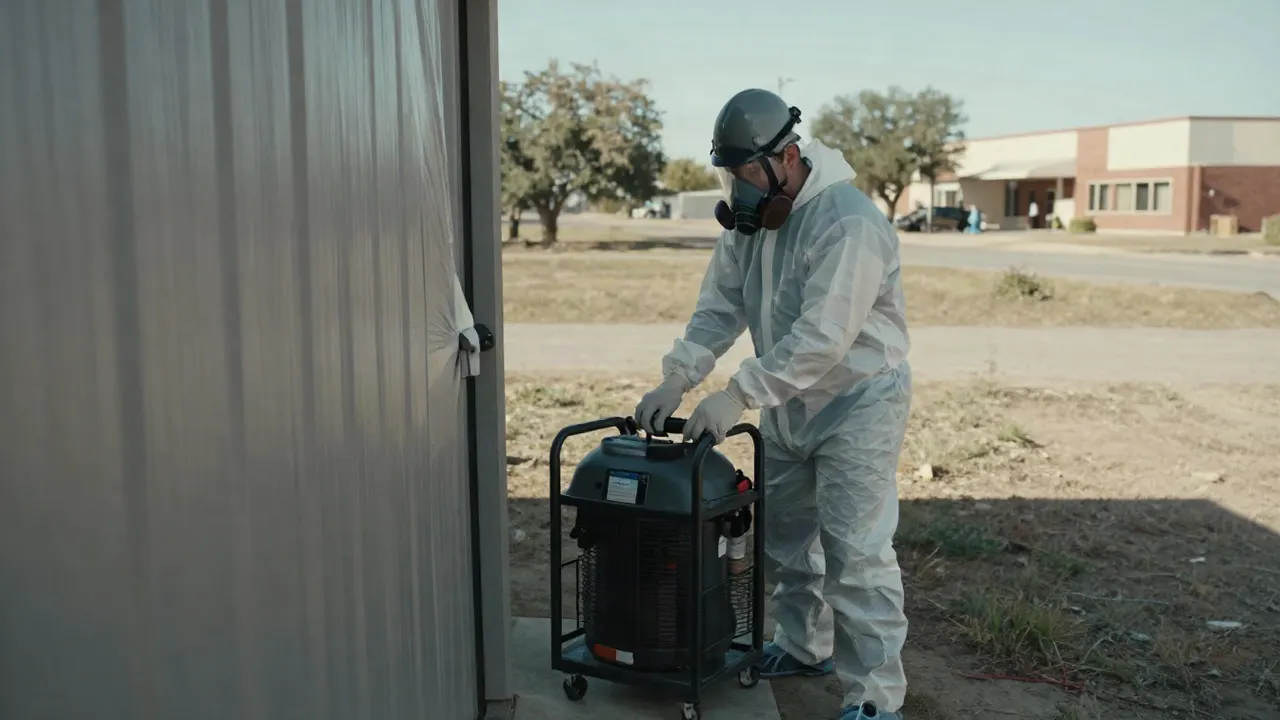
Blood leaves a smell that gets worse, not better, as it dries into padding and subfloor. We use enzyme cleaners to break down the protein, then hydroxyl generators and HEPA air scrubbers to clear the air. A spray of air freshener is not odor treatment. We remove the source, then we clear the room.
How service works
What to Expect From Start to Finish
Every job follows the same five steps. You will know what is happening and how long it takes before we start.
STEP 01
Call and Triage
You call (713) 804-9653. We ask four questions: what happened, what surface is affected, how long ago, and whether anyone is still on scene. That tells us what to load. Most calls get a crew rolling within 60 to 90 minutes anywhere in the Naval Air Station JRB area.
Tools and methods
Tools and Methods We Use on Every Job
Tyvek suits and nitrile gloves
Full-body protection for every tech on scene. We change suits between contaminated and clean zones to stop cross-contamination from following us out of the work area.
N95 and P100 respirators
Airborne bloodborne pathogens and aerosolized particles are a real exposure risk during extraction. P100 cartridges go on for scenes involving decomposition or heavy fluid volume.
ATP meters
These read organic residue on a surface in seconds. We use them to verify disinfection before we sign off, and we re-treat any surface that reads above threshold.
Hydroxyl generators and HEPA air scrubbers
Hydroxyl generators neutralize odor molecules at the source, while HEPA scrubbers pull airborne particles out of the room. Both run for hours after physical cleanup is finished.
Biohazard bags and sharps containers
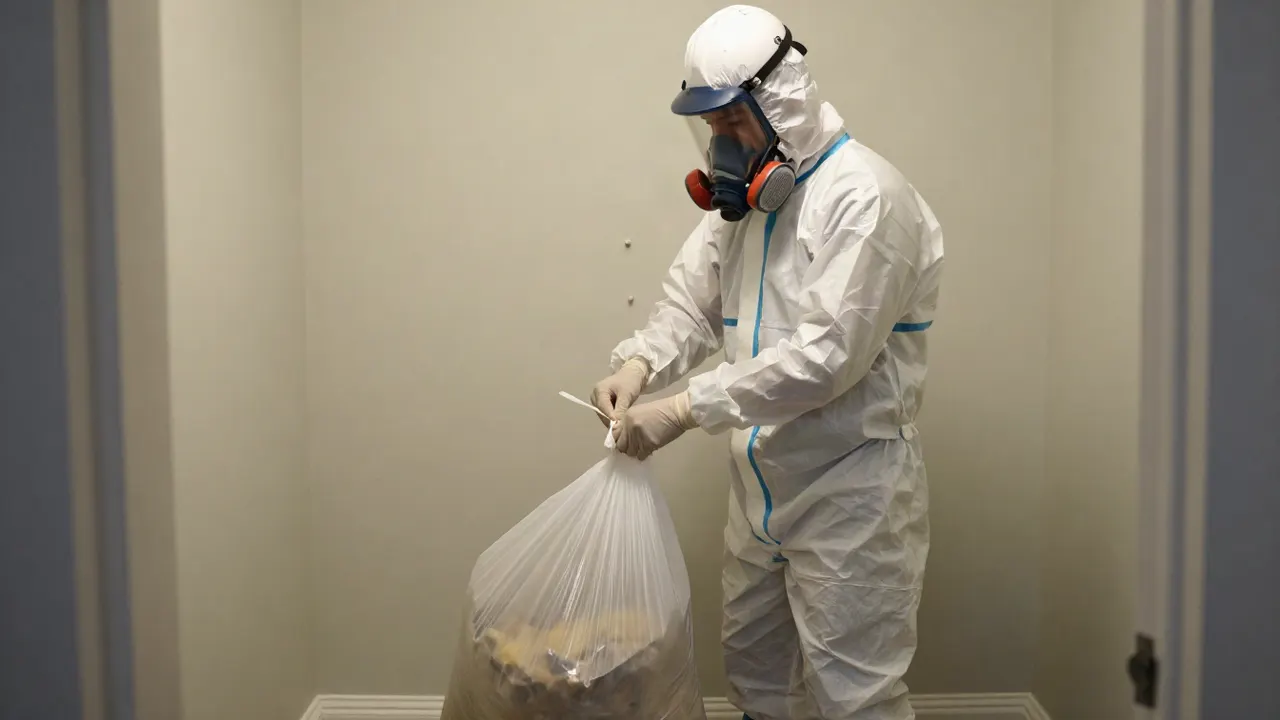
All contaminated materials, including sharps, go into DOT-compliant containers. Nothing leaves the property in a trash bag or at the curb.
EPA-registered disinfectants
We use hospital-grade products, including sporicidal agents on hard surfaces, and follow the full label contact time. Rushing the dwell time is the most common mistake in this trade.
Thermal and ULV foggers
For large or hard-to-reach areas, foggers apply disinfectant evenly across surfaces that a sprayer cannot cover. We use them on vehicles, ductwork, and rooms with complex geometry.
OSHA Bloodborne Pathogens Standard (29 CFR 1910.1030)
This is the federal rule that governs how we protect our techs and how we handle contaminated waste. It sets the PPE requirements, the exposure control plan, and the labeling rules for everything we remove from a scene.
EPA-registered disinfection protocol
Every disinfectant we use carries an EPA registration number, and we follow the label's contact time exactly. Skipping the dwell time is the fastest way to leave live pathogens behind on a surface that looks clean.
IICRC restoration standards
These standards tell us how far contamination has spread through building materials and when removal is required instead of cleaning. They are the same standards used in water and mold restoration, applied to biohazard work.
Texas DSHS and TCEQ waste handling
Biohazard waste in Texas has to be transported and disposed of through licensed channels. We follow DSHS rules for handling and TCEQ requirements for transport, and we provide the manifest that proves it.
ATP verification
Before we call a job complete, we swab treated surfaces with an ATP meter. The reading tells us whether organic residue remains. It is an objective check, not a visual one, and it is how we know the space is actually safe.
Where this service fits
When to Call for Blood Cleanup
A household accident left blood on carpet and a mattress in a Westworth Village home.
We responded the same evening, cut out the affected carpet and padding, removed the mattress as contaminated waste, treated the subfloor, and ran hydroxyl generators overnight to clear odor. The bedroom was safe to use the next morning, and the homeowner had a full insurance packet in hand within 24 hours.
A rental unit in White Settlement had blood in the bathroom and hallway after a tenant medical emergency.
We worked with the property manager on a flat quote, arrived in an unmarked truck, contained the hallway, and completed extraction, disinfection, and ATP verification in a single day. The unit was re-leased within the week, and the manager had the waste manifest on file for the owner.
A vehicle in Benbrook had blood soaked into the driver's seat and center console after an injury.
We pulled the seat, treated the foam and upholstery with enzyme cleaner and hospital-grade disinfectant, and ran a small air scrubber inside the cab for two hours. The interior was odor-free and verified clean, and the owner avoided a full seat replacement.
A workplace injury at a River Oaks shop left blood on concrete and equipment.
We responded within 90 minutes, contained the area, disinfected the concrete and equipment with a sporicidal agent, and documented the scene for the employer's OSHA file. The shop was back in service the same shift, with the incident documentation the employer needed for reporting.
Local execution
How Blood Cleanup Runs in Naval Air Station JRB
Naval Air Station JRB sits on the west side of Fort Worth, and the housing stock around it ranges from 1950s ranch homes in White Settlement and River Oaks to newer builds in Benbrook and Wedgwood. That mix matters for blood cleanup. Older homes often have original hardwood under carpet, which wicks fluid along the seams and into the subfloor. Newer construction uses engineered flooring and thicker padding, which holds more fluid before it reaches the slab but spreads it wider when it does. Summer heat in Tarrant County pushes odor development fast, so a spill that sits for a day in July smells far worse than the same spill in January. We keep enzyme cleaners and hydroxyl generators loaded year-round for that reason. If you need emergency blood spill cleanup Naval Air Station JRB at 2 a.m., we are already set up for it. Most of our calls here come from families near the base, property managers in White Settlement and River Oaks, and vehicle owners who had a medical emergency on the road. We know the streets, we know the housing, and we know how to get in and out without drawing attention.
NAS JRB Fort Worth
On-base and immediately adjacent housing often has shared walls and close neighbors. We park where you ask and keep the work quiet.
White Settlement
A high concentration of older rental properties. Many calls here involve carpet over original hardwood, which needs subfloor treatment after extraction.
River Oaks
Smaller homes with tight floor plans. Containment matters more here because contamination spreads to adjacent rooms quickly in a compact layout.
Benbrook
Newer construction with engineered flooring and thicker padding. Fluid spreads wider but stays shallower, so we scope a larger area for treatment.
Wedgwood
Established neighborhood with a mix of owner-occupied and rental homes. We handle both, and we document the scene the same way for either.
Summer heat accelerates odor and pathogen growth
A blood spill in July can develop noticeable odor within 12 hours. We prioritize odor treatment and run hydroxyl generators longer on summer calls.
Older homes with original hardwood under carpet
Fluid wicks along hardwood seams and into the subfloor. We pull carpet and padding, then treat the hardwood and subfloor separately before any flooring goes back down.
Slab-on-grade construction common in the area
Concrete slabs do not absorb fluid the way wood does, but they hold contamination at the surface. We treat and verify the slab with ATP meters before replacement flooring is installed.
Shared walls in base-adjacent housing
Containment has to be tight to keep contamination and odor out of neighboring units. We seal the work area fully and use air scrubbers to keep particles from migrating.
Problems we solve
Problems We Solve for Naval Air Station JRB Property Owners
Blood cleanup goes wrong in predictable ways when it is handled by the wrong crew. Here are the problems we see most often and how we fix them.
Blood soaked into carpet padding and subfloor
We cut out the carpet and padding, treat the subfloor with an EPA-registered disinfectant, verify with an ATP meter, and document the removal for your insurance claim. Replacement flooring is quoted separately so you know the full cost upfront. Pathogens stay alive in the padding for days, and the odor gets worse as the protein breaks down. Surface cleaning does nothing for the layers underneath.
Untrained cleanup spread contamination to other rooms
Our techs set containment before they touch anything, wear shoe covers and Tyvek suits, and change PPE between zones. We treat the whole affected footprint, not just the room where the spill happened. Walking through a blood scene in street shoes tracks pathogens into hallways, bathrooms, and kitchens. What started as one room becomes three.
Lingering odor after a DIY cleanup attempt
We remove the source material, apply enzyme cleaners that break down the protein, then run hydroxyl generators and HEPA air scrubbers for several hours. The air reads clean before we leave, and we verify it. Household cleaners kill surface bacteria but leave the protein that causes odor. The smell comes back within a week, usually worse than before.
Insurance claim stalled by missing documentation
We photograph the scene before, during, and after, itemize every material removed, and provide the waste manifest with the final report. Your adjuster gets a complete file, which is what gets claims approved the first time. Adjusters deny or delay claims when there is no photo record, no itemized scope, and no waste manifest. The homeowner ends up paying out of pocket.
A practical standard for every visit.
Clear planningPrepared arrivalsCareful workLocal follow-through
Experience in the details
Four Years of Biohazard Work in Tarrant County
TraumaShield Pros has been in business since 2022, and every one of those years has been spent on biohazard and trauma scenes, not general cleaning. Our techs train on the OSHA Bloodborne Pathogens Standard, the EPA registration rules for the disinfectants we use, and the IICRC restoration standards that govern how far contamination spreads through building materials. We follow Texas Department of State Health Services rules for biohazard waste and TCEQ requirements for transport and disposal. That means the waste leaves your property legally, and you have the paperwork to prove it.
Where we work
One local team. A lot of ground covered.
NAS JRB Fort WorthWestworth VillageWhite SettlementRiver OaksSansom ParkLake WorthBenbrookCityviewWestern HillsWedgwood
Check my address Most residential jobs in this area run $450 to $1,200 in 2026, with a typical single-room scene landing around $700. Vehicle interiors usually fall between $350 and $800. Larger scenes involving subfloor, multiple rooms, or decomposition run $1,500 to $4,000. We give you a flat number on the first call, before anyone suits up.
You do not, honestly. Blood wicks through carpet into the padding and often into the subfloor within minutes, and household cleaners cannot reach the layers underneath. We cut out the affected carpet and padding, treat the subfloor with an EPA-registered disinfectant, verify with an ATP meter, and replace the flooring. Trying to spot-clean it yourself usually spreads the contamination and leaves odor behind.
Yes, in most cases. Sudden and accidental blood events, including accidents and unattended deaths, are typically covered under homeowner and renters policies. We photograph the scene, itemize affected materials, and provide a written scope your adjuster can process directly. We have handled enough claims in Tarrant County to know what documentation gets approved the first time.
Call a licensed biohazard remediation company, not a general cleaning service or a carpet cleaner. Blood is regulated waste under Texas DSHS and TCEQ rules, and it has to be transported and disposed of through licensed channels. TraumaShield Pros handles the cleanup, the waste manifest, and the insurance paperwork. Reach us at (713) 804-9653 any hour of the day.
Keep exploring
Other Biohazard Services We Handle
Your next step is waiting
Need Blood Cleanup in Naval Air Station JRB, Texas Tonight?
We answer the phone 24 hours a day, seven days a week. Call (713) 804-9653 and you will talk to a real person who can give you a flat price and an arrival window in the same call. Unmarked trucks, certified techs, insurance paperwork handled.
Start with the basics
Contact TraumaShield Pros
Call (713) 804-9653 any time, day or night. We answer 24/7 and dispatch crews from NAS JRB Fort Worth around the clock. If you prefer email, send the details to info@traumashieldpros.com and we will respond the same day. Most calls inside our service area get a truck on-site within 60 minutes.