How to remove urine and feces odor from concrete floors
Urine and feces odor in concrete is a contamination problem, not a cleaning problem. Here is how to remove it permanently in Naval Air Station JRB, Texas.
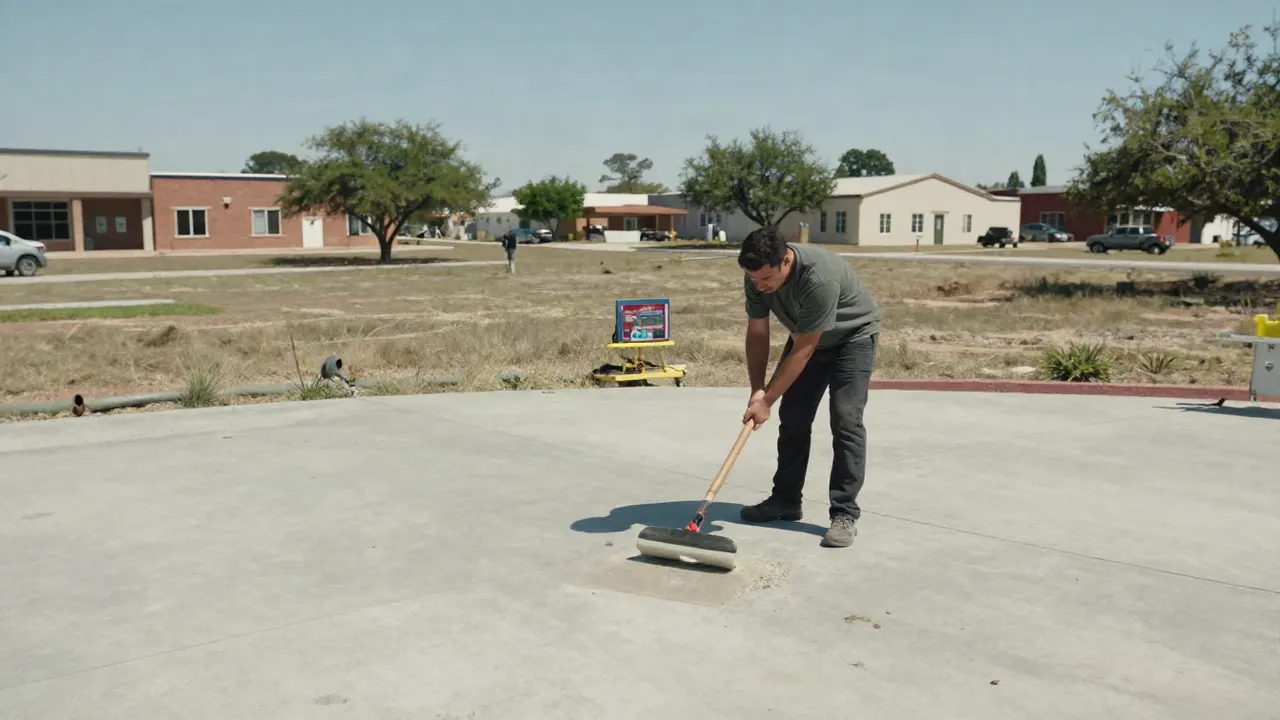
Removing urine and feces odor from concrete floors requires pulling the contamination out of the slab, not just wiping the surface. Urine and feces odor remediation is a multi-stage process that uses enzymatic digestion, alkaline extraction, and a penetrating sealer to neutralize the uric acid crystals and bacteria that keep producing smell. A mop and a bottle of bleach will not do it.
We handle these calls across Naval Air Station JRB and the surrounding Tarrant County neighborhoods, and the pattern is always the same: the surface looks clean, the room still smells, and the odor returns every time humidity rises. Here is exactly how to fix it for good.
Why urine and feces odor sinks into concrete
Concrete is porous. A standard garage slab or basement floor has millions of microscopic capillaries that pull liquid downward by capillary action, the same way a paper towel wicks water. When urine or liquefied feces sits on that slab, the liquid and the bacteria inside it travel 1/4 inch to 1 inch deep within a few hours.
Urine contains urea, creatinine, and uric acid. When bacteria break down the urea, they release ammonia - that sharp smell you notice first. Uric acid is the stubborn part. It forms crystals that bind to the calcium in the concrete and stay there for years. Every time relative humidity climbs above 60%, those crystals re-release odor into the room. In North Texas, that means every spring and every rainy stretch from March through June.
Feces adds a second problem: sulfur compounds and a heavier bacterial load. A single diarrhea incident on a garage floor can seed bacteria across a 4 to 6 square foot area within an hour. If the slab has a control joint or a hairline crack nearby, the contamination follows the crack and spreads sideways.
This is why surface cleaning fails. You are not cleaning a floor. You are trying to decontaminate a sponge.
How do you remove urine and feces odor from concrete floors?
The short answer: you saturate the slab with an enzyme or alkaline cleaner, let it dwell long enough to digest the uric acid crystals, extract the slurry, neutralize the pH, dry the slab completely, and then seal it. Skipping any one of those steps lets the smell return.
Here is the sequence we use on every job, whether it is a single pet accident in a Westworth Village garage or a hoarding situation with years of layered contamination.
- Remove all solids and porous materials. Cardboard, drywall, carpet, tack strips, and baseboards that touched the contamination come out first. Porous materials cannot be deodorized. They get bagged and disposed of.
- Pre-treat with an enzyme cleaner. We flood the area with a concentrated enzyme solution and let it dwell 30 to 60 minutes. Enzymes eat the organic matter that bacteria feed on. This is the step that breaks down uric acid crystals.
- Extract with a wet vacuum or hot water extraction unit. We pull the slurry out of the pores. A shop vac with a standard filter will not do this - you need the suction and the water volume of a truck-mount or a high-CFM extractor.
- Apply an alkaline cleaner and agitate. A pH 10 to 12 alkaline cleaner dissolves fats and proteins that enzymes miss. We scrub with a stiff-bristle brush or a floor buffer, then extract again.
- Neutralize with a mild acid rinse. A diluted vinegar or commercial acid rinse brings the pH back to neutral so the sealer can bond.
- Dry the slab. This is the step most homeowners skip. Concrete holds moisture for days. We use commercial air movers and a dehumidifier to bring the slab back to under 15% moisture content before sealing. In a garage in July, that can take 12 to 24 hours.
- Seal with a penetrating sealer. A solvent-based or water-based penetrating sealer soaks into the pores and blocks moisture from reaching any residual contamination. Two coats, 4 hours apart, is standard.
For a single pet accident on a garage floor, the whole process takes 3 to 5 hours. For a room with years of contamination, it can run 2 to 3 days with drying time.
If the contamination came from a larger incident - a hoarding situation, an unattended death, or a sewage backup - the scope is bigger than a floor treatment. That is when we bring in our Feces & Urine Cleanup in Naval Air Station JRB, Texas team to handle the full decontamination, including walls, baseboards, and any adjacent porous materials.
What cleaner removes urine odor from concrete in Naval Air Station JRB Texas?
No single cleaner removes urine odor from concrete. You need a two-part approach: an enzyme cleaner to digest the uric acid crystals, then an alkaline cleaner to kill the bacteria and break down the remaining proteins.
Here is what actually works, in order of effectiveness:
- Enzyme-based pet odor eliminators (the kind sold at pet stores and hardware stores). Look for a product that lists "enzyme" or "bacterial culture" on the label. These work on uric acid. They do not work on feces bacteria.
- Alkaline cleaners with a pH of 10 to 12. Commercial degreasers and concrete cleaners fall into this category. They break down fats and proteins in feces.
- Oxygen-based cleaners (sodium percarbonate). These release oxygen when mixed with water and lift contamination out of pores. Good for a second pass.
- Bleach. Bleach kills surface bacteria but does not touch uric acid crystals. It also leaves behind a strong chlorine smell that masks the problem for a few days and then fades. We do not use bleach on concrete for odor removal.
- Vinegar. A 50/50 vinegar and water mix is a decent neutralizer after cleaning, but it will not remove the odor on its own.
For a small area - say a 2-foot by 2-foot pet accident on a garage floor - you can buy an enzyme cleaner at a local hardware store for $15 to $30 and follow the label directions. For anything larger than 10 square feet, or anything involving feces, the volume of cleaner and the extraction equipment needed push the job past what a homeowner can reasonably do.
If you are dealing with a situation that also involves blood or other bodily fluids, the cleaning protocol changes. Bloodborne pathogens require a different disinfectant and a higher level of personal protective equipment. Our Bodily Fluids Cleanup in Naval Air Station JRB, Texas team handles those calls with hospital-grade disinfectants and full containment.
Sealing concrete: what it does and does not do
Sealing concrete stops urine odor only if the contamination has already been removed. A sealer is a barrier, not a neutralizer. If you seal over active contamination, the uric acid crystals stay in the slab, the bacteria keep producing ammonia, and the smell eventually finds a way through the sealer - usually within 6 to 12 months.
Here is the difference between the two main sealer types:
- Penetrating sealers soak into the pores and react with the calcium in the concrete. They block moisture from moving through the slab. This is what you want for odor control. A good penetrating sealer costs $30 to $60 per gallon and covers 200 to 400 square feet per coat.
- Film-forming sealers (epoxy, polyurethane, acrylic) sit on top of the slab. They create a physical barrier, but they can trap moisture underneath and cause the sealer to peel. If the slab has any residual moisture, a film-forming sealer will fail within a year.
For a garage or basement floor in North Texas, we recommend a penetrating sealer with a solvent base. It handles the temperature swings better than water-based products. Two coats, applied 4 hours apart, give you a 5 to 10 year barrier.
One more thing: sealing a floor does not fix the air quality in the room. If the contamination was heavy, the odor has also soaked into drywall, baseboards, and any furniture in the space. Those materials need to be cleaned or replaced separately. That is a bigger job, and it is one we handle through our Odor Treatment & Cleanup in Naval Air Station JRB, Texas service.
Common mistakes that make the smell worse
We see the same mistakes on almost every call. Each one adds time and cost to the fix.
- Using bleach or ammonia-based cleaners. Bleach kills surface bacteria but leaves uric acid crystals untouched. Worse, mixing bleach with ammonia (which is already in the urine) creates chloramine gas - a respiratory hazard.
- Painting over the concrete. Paint traps moisture and contamination underneath. When the paint peels, the smell comes back stronger.
- Sealing too soon. If the slab is still wet from cleaning, the sealer will not bond. It will peel within months. Always test moisture content before sealing.
- Skipping the extraction step. Mopping spreads the contamination around. You need suction to pull it out of the pores.
- Assuming the smell is gone because the surface is dry. Uric acid crystals are invisible and odorless when dry. They reactivate with humidity. A dry floor in January can smell like a kennel in June.
- Not replacing baseboards and drywall. If urine or feces touched drywall, the paper facing absorbs it. No amount of cleaning will fix that. The bottom 12 inches of drywall usually needs to come out.
We have seen homeowners spend $400 on cleaners and sealers over two years trying to fix a problem that a professional remediation would have solved in one day for $600 to $1,200.
When to call a professional
Call a professional when the contamination covers more than 10 square feet, when feces is involved, when the odor has been present for more than a week, or when the affected area is in a living space rather than a garage or basement.
Here is the rule we give people over the phone: if you can smell it from the next room, it is a professional job. If you have already tried an enzyme cleaner and the smell came back, it is a professional job. If the contamination is near a HVAC return or a floor drain, it is a professional job - the contamination has likely spread into the ductwork or the drain line.
We handle these calls every week across Naval Air Station JRB and the surrounding communities. Our team uses commercial extraction equipment, hospital-grade disinfectants, and moisture meters to confirm the slab is dry before we seal. We also handle the disposal - contaminated materials cannot go in your regular trash pickup in Tarrant County.
If you are dealing with a larger biohazard situation, such as a hoarding cleanup or an unattended death, the floor is only one part of the job. Our Biohazard Cleanup in Naval Air Station JRB, Texas team handles the full scope, from initial assessment through final clearance.
Frequently Asked Questions
How do you remove urine and feces odor from concrete floors?
You remove it by saturating the slab with an enzyme cleaner, extracting the slurry with a wet vacuum, applying an alkaline cleaner, neutralizing the pH, drying the slab to under 15% moisture, and sealing with a penetrating sealer. The full process takes 3 to 5 hours for a small area and 2 to 3 days for heavy contamination.
What cleaner removes urine odor from concrete in Naval Air Station JRB Texas?
An enzyme-based cleaner followed by an alkaline cleaner with a pH of 10 to 12. Enzyme cleaners digest the uric acid crystals that cause the odor. Alkaline cleaners kill the bacteria. Bleach does not work because it does not penetrate the concrete pores. Local hardware stores carry both for $15 to $40.
Can urine odor be permanently removed from concrete in Naval Air Station JRB?
Yes, if the contamination is fully extracted and the slab is sealed with a penetrating sealer. The key is removing the uric acid crystals before sealing. If you seal over active contamination, the odor returns within 6 to 12 months. A professional remediation with proper extraction and sealing gives permanent results.
When should I call a professional for feces odor in Naval Air Station JRB Texas?
Call a professional when the contamination covers more than 10 square feet, when feces is involved, when the odor has lasted more than a week, or when you can smell it from the next room. Feces carries bacteria that require hospital-grade disinfectants and proper disposal. DIY cleaning rarely reaches the bacteria deep in the slab.
Does sealing concrete stop urine odor in Naval Air Station JRB?
Sealing stops odor only if the contamination has already been removed. A penetrating sealer blocks moisture from reaching any residual contamination, which prevents the uric acid crystals from reactivating. If you seal over active contamination, the odor will return. Always clean and dry the slab first, then seal.
Get help with Biohazard Cleanup in Naval Air Station JRB
If the smell is still there after cleaning, or if the contamination is larger than a single pet accident, call us. We handle urine and feces odor remediation across Naval Air Station JRB and the surrounding Tarrant County communities, and we can usually be on-site the same day.
Call TraumaShield Pros at (713) 804-9653. We will assess the slab, give you a flat price before we start, and leave the floor sealed and odor-free.