Why does my house still smell after a sewage backup cleanup
That sewage smell after cleanup usually means contaminated material was missed, not that the job failed. Here is where the odor hides and how to kill it for good.
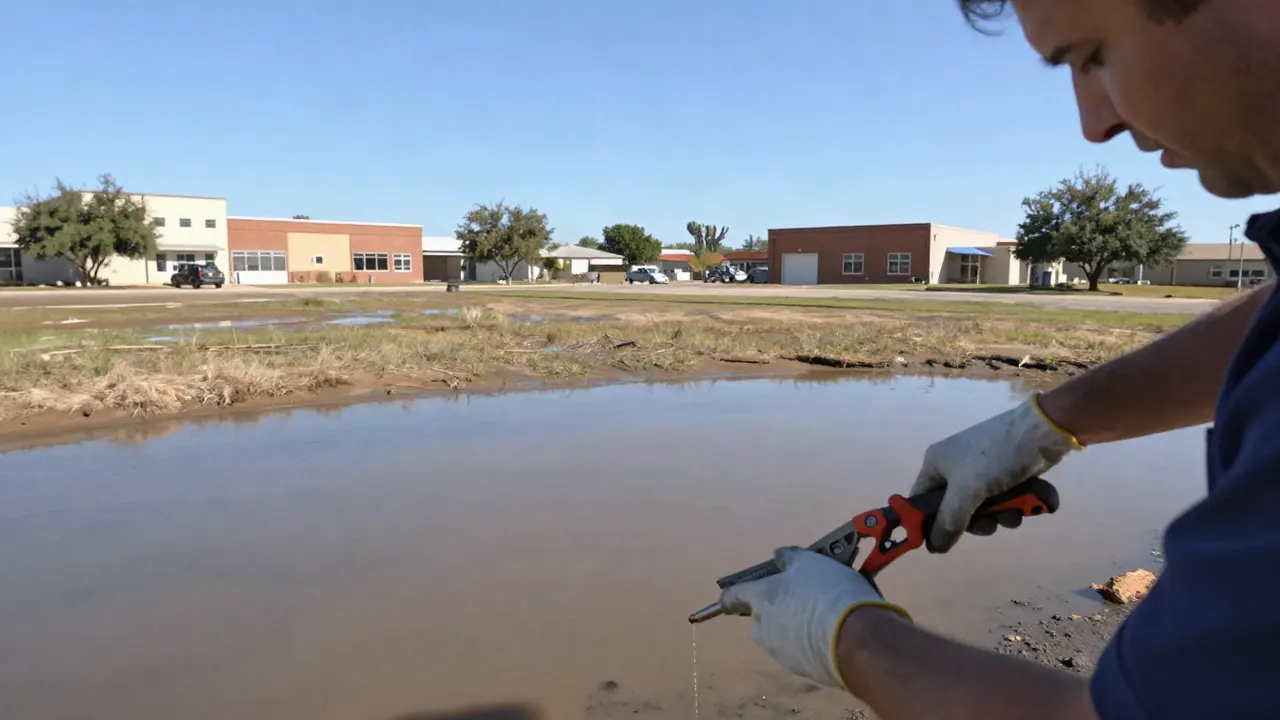
Your house still smells after a sewage backup cleanup because the odor source was never fully removed - not because the smell is permanent. Sewage odor comes from hydrogen sulfide and other gases produced by bacteria, and those bacteria keep producing gas as long as contaminated material is still in the house. If the smell is back within 24 to 72 hours, something porous, hidden, or downstream of the visible mess is still holding sewage.
We handle this every week in Naval Air Station JRB, Texas, and the pattern is almost always the same: the water got wiped up, but the source did not get removed. This post walks through exactly where that smell hides, what actually kills it, and when it is time to bring in a crew.
The short answer: the smell is coming from something the cleanup missed
Sewage backup odor removal is not a cleaning job - it is a removal job. Category 3 water, which is what sewage backup is classified as under the IICRC S500 standard, contains bacteria, viruses, and parasites that do not die from surface wiping. If the material that absorbed that water stays in the house, it keeps off-gassing.
That is why a mop, bleach, and a fan rarely solve the problem. The smell you are chasing is not on the surface. It is inside drywall paper, under baseboards, in carpet padding, and in the crevices of a floor drain that never got flushed.
Why does my house smell like sewage after cleanup?
Why does my house smell like sewage after cleanup? Because sewage odor is a biological process, not a stain. The bacteria that produce the smell live in the material, and they keep producing gas until either the material is gone or the bacteria are killed and the residue is physically removed.
There are five reasons this happens most often:
- Porous materials were dried instead of removed. Drywall, carpet, padding, and particleboard cannot be sanitized once they have absorbed Category 3 water. Drying them just concentrates the odor.
- The water traveled further than the visible mess. Sewage wicks up drywall 12 to 24 inches above the water line and creeps under baseboards and into wall cavities.
- The source was never cleared. If the sewer line is still partially blocked, every flush pushes a little more gas back into the house.
- The HVAC system pulled it in. If the blower was running during the backup, sewage particles and odor compounds are now sitting in the ducts and on the evaporator coil.
- The subfloor or slab was not treated. Concrete is porous. Sewage soaks in, and no amount of surface cleaner reaches it.
Any one of these is enough to keep the smell going for weeks. Two or three together is what we usually find when a homeowner calls us after a DIY cleanup.
Where sewage odor hides in a Naval Air Station JRB home
Sewage odor in Naval Air Station JRB homes hides in the same places it hides everywhere else, but the housing stock here makes a few of them worse. The neighborhood around the installation includes a mix of mid-century ranch homes and newer construction, and both have their own failure points.
Under the baseboards and inside the wall cavity
Baseboards act like a sponge. Sewage wicks up behind them, and the drywall paper on the back side of the wall stays wet for weeks. If your cleanup crew pulled the carpet but left the baseboards in place, that is almost certainly where the smell is coming from.
Carpet and pad
Sewage backup smell in carpet is one of the most common complaints we get in Naval Air Station JRB, Texas. Carpet pad is the problem - it is basically a sponge, and once it takes on Category 3 water it has to go. Cleaning it in place will not work. The carpet itself is usually a loss too, but the pad is non-negotiable.
Floor drains and P-traps
A floor drain that has not been flushed holds a film of sewage on the inside of the pipe. Every time the air pressure in the house changes, that drain burps gas. We flush and sanitize every floor drain within 20 feet of the backup before we call a job done.
Subfloor, joists, and slab
Plywood subfloor and floor joists soak up sewage and hold it. On slab-on-grade homes, the concrete itself absorbs it. Both need to be treated with an EPA-registered disinfectant and, in bad cases, encapsulated.
HVAC ducts and the air handler
If the air conditioner was running during the backup, odor compounds are now in the ducts. You will notice the smell gets worse when the system kicks on. That is your confirmation.
If your backup came from a failed line rather than a blocked one, the same crew that handles biohazard remediation Naval Air Station JRB can usually handle the sewage side too - the containment and disinfection process is nearly identical.
How to get rid of sewage smell in house: what actually works
How to get rid of sewage smell in house comes down to four steps in order: remove, disinfect, dry, and treat the air. Skip any one of them and the smell comes back.
Step 1: Remove every porous material that touched the water
This means carpet, pad, baseboards, the bottom 12 to 24 inches of drywall, and any furniture with fabric or particleboard. Bag it and get it out of the house the same day. Do not store it in the garage - the garage is attached to the house.
Step 2: Disinfect with the right product
Bleach is not the answer. It is deactivated by organic matter, which is exactly what sewage is. Use an EPA-registered disinfectant labeled for sewage or Category 3 water, and give it the full dwell time on the label - usually 10 minutes of wet contact. Apply it to every surface that touched the water, including the back of the drywall, the studs, and the subfloor.
Step 3: Dry the structure, not just the air
You are aiming for a moisture content below 16 percent in wood framing and below 4 percent in drywall. A $30 pin meter from a hardware store will tell you. Run dehumidifiers and air movers until the meter says dry, not until the floor feels dry.
Step 4: Treat the air and the ducts
Hydroxyl generators, ozone (only in an unoccupied space), and thermal fogging are the three tools that actually neutralize odor compounds in the air and in soft surfaces. If the HVAC was running, get the ducts cleaned and the coil sanitized.
For homes where the smell has already soaked into walls and framing, professional odor removal Naval Air Station JRB uses equipment most homeowners do not have access to. That is usually the difference between a smell that fades and a smell that is gone.
Common mistakes that keep the smell around
Common mistakes during sewage cleanup are what turn a two-day job into a two-month problem. Here are the ones we see most.
- Using bleach as a primary disinfectant. It kills some bacteria on contact but does nothing for the residue, and it does not penetrate porous material.
- Renting a carpet cleaner. A consumer carpet cleaner pushes contaminated water deeper into the pad and subfloor. It makes the smell worse, not better.
- Running a box fan. A fan spreads aerosolized bacteria through the house. If you must move air, use a HEPA air scrubber.
- Painting over the smell. Kilz and similar primers block odor for a few weeks, then it bleeds through. The source has to go first.
- Assuming the smell will fade on its own. It will not. Sewage odor compounds are stable and can persist for months in a sealed house.
- Skipping the sewer line inspection. If the line is still partially blocked, you are cleaning a mess that is going to happen again.
One more: do not assume the smell is only in the room where the backup happened. Sewage gas travels. We have found the source in a hallway closet when the backup was in a bathroom 30 feet away.
When to call a professional for sewage odor
Call a professional for sewage odor when the smell is still there 72 hours after your own cleanup, when the backup covered more than about 10 square feet, or when the water sat for more than 24 hours before anyone started. Those three conditions mean the contamination has almost certainly reached porous materials you cannot see.
We also get called when the backup involved a toilet, which is always Category 3 water, or when anyone in the house has a compromised immune system, is pregnant, or is under 5 years old. Sewage exposure is a real health risk, not just a smell problem.
Our team handles the whole job: we find the source, remove what has to go, disinfect what stays, dry the structure, and treat the air. We test with a moisture meter before we leave, and we do not call a job done while the meter still reads wet. If you want to see the full scope of what we handle, look at Biohazard Cleanup in Naval Air Station JRB, Texas.
We also serve the surrounding communities. If you are just outside the installation, you can see our Biohazard Cleanup in NAS JRB Fort Worth page for the same service area details.
Frequently Asked Questions
Why does my house still smell after sewage backup cleanup?
Because contaminated porous material - carpet pad, drywall, baseboards, subfloor - is still in the house and still off-gassing. Surface cleaning does not reach it. The smell returns within 24 to 72 hours when the source was missed.
How long does sewage smell last after cleanup in Naval Air Station JRB Texas?
With a proper cleanup, odor is gone in 3 to 7 days. If porous materials were left in place, the smell can persist for 2 to 6 months and sometimes longer in a closed-up house during summer.
What kills sewage smell in a house in Naval Air Station JRB?
Removal of contaminated material, then an EPA-registered disinfectant with a full 10-minute dwell time, then structural drying below 16 percent moisture in wood. Air treatment with a hydroxyl generator or thermal fogging finishes the job.
Should I call a professional for sewage odor in Naval Air Station JRB?
Yes, if the smell is still there 72 hours after your own cleanup, if the backup covered more than 10 square feet, or if the water sat for over 24 hours. Those conditions mean contamination reached materials you cannot see or reach.
Does homeowners insurance cover sewage backup odor removal in Naval Air Station JRB Texas?
Only if you have a sewage backup endorsement on your policy. Standard HO-3 policies exclude sewage backup. The endorsement typically adds $50 to $150 per year and covers $5,000 to $25,000 in cleanup costs. Call your carrier before you start work.
Get help with Biohazard Cleanup in Naval Air Station JRB
If the smell is still there after your cleanup, the source is still there too. We will find it, remove it, and confirm the structure is dry before we leave.
Call TraumaShield Pros at (713) 804-9653 for Biohazard Cleanup in Naval Air Station JRB and the surrounding communities.