Why does my rental property smell like decay after a tenant moves out
That decay smell in your vacant rental usually means hidden organic matter is still breaking down. Here is how to find it, remove it, and clear the air for good.
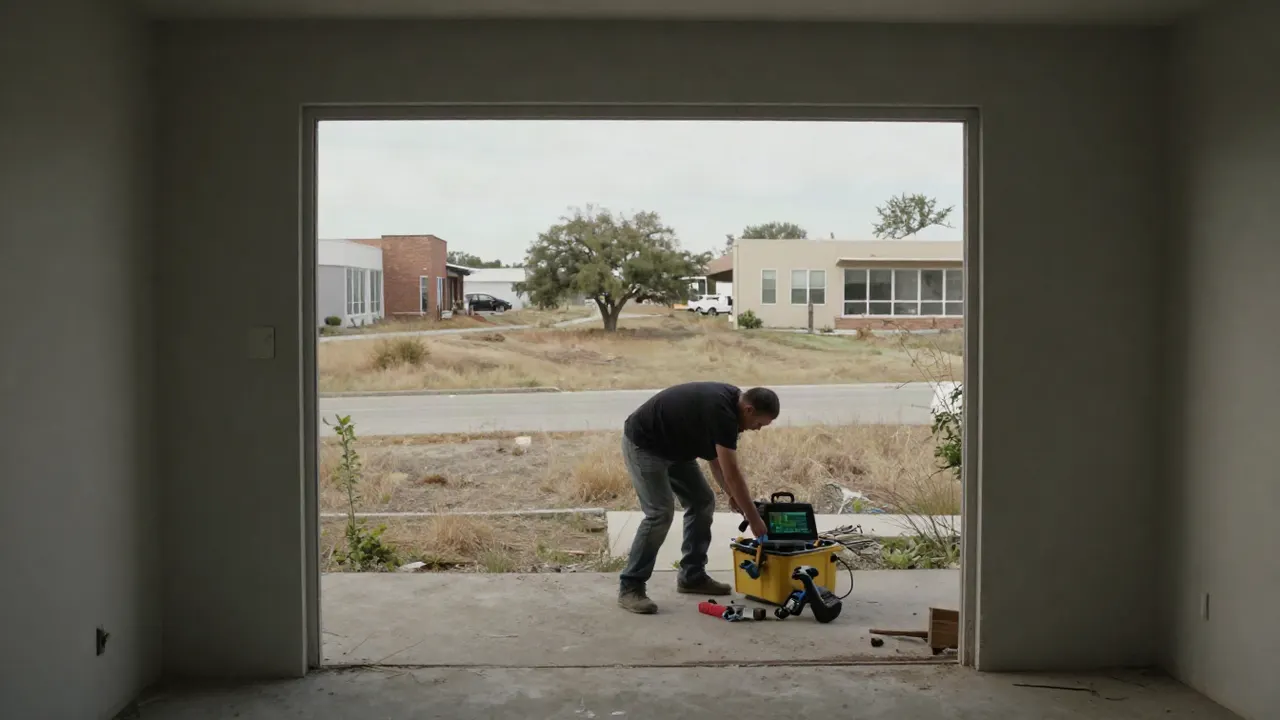
Your rental smells like decay after a tenant moves out because organic material - food, pet waste, a dead animal, or human remains - is still decomposing somewhere inside the unit. The smell will not fade on its own, and air fresheners only mask it for a few hours. The fix is finding the source, removing every trace of it, and treating the surfaces and air that absorbed the odor.
We handle this call several times a month around Naval Air Station JRB, and the pattern is almost always the same: the tenant left in a hurry, something organic was left behind or hidden, and the Texas heat did the rest. Below we break down the sources, the removal steps, and the point where a DIY approach stops working.
The short answer: decay odor means organic matter is still breaking down
A rental property that smells like decay is a property where bacteria are actively consuming organic material and releasing sulfur compounds, ammonia, and other gases. That process does not stop when the tenant leaves. It accelerates in a closed-up unit.
Decomposition odor removal for a rental property is not a cleaning job in the usual sense. It is a remediation job that combines source removal, disinfection, and odor neutralization. If you skip the source removal, the smell returns within days.
The three gases you are actually smelling are hydrogen sulfide (rotten eggs), putrescine and cadaverine (the specific "death" smell), and ammonia from urine. Each one binds to different surfaces - drywall, grout, subfloor, and HVAC ductwork - which is why the smell can linger in a room where you cannot see anything wrong.
The most common sources we find in Naval Air Station JRB rentals
In rentals near the base, the source is usually one of six things. We list them in the order we find them, most common first.
- Refrigerator or freezer that lost power. A tenant unplugs the fridge on the way out, the door stays closed, and three days later the unit is a biohazard. This is the single most common cause we see.
- Pet waste in carpet or closets. Cats and dogs left alone for a week can saturate a carpet pad and the subfloor beneath it. The smell reads as decay, not urine, once it ferments.
- Dead rodents or wildlife in walls or attic. A rat or squirrel dies in a wall cavity and the odor seeps through outlets and baseboards. This is common in older rental stock around White Settlement and Sansom Park.
- Hidden food waste. Trash bags left in a closet, a cooler of old food in a garage, or a pantry item that leaked and was never cleaned.
- Unattended death or decomposition. A tenant passes away and is not found for days or weeks. This is the source that requires professional remediation.
- Sewage backup or toilet overflow. Black water sitting under vinyl or tile for a week produces a decay-adjacent smell that most landlords misidentify.
If you own property near the base, we also serve landlords across Biohazard Cleanup in White Settlement who run into the same short-turnaround problems - tenants leave, the unit sits, and the smell sets in before the next lease starts.
Why the smell gets worse after the tenant leaves
The smell gets worse after move-out because the unit is now closed. Windows are shut, the AC is off or set high, and the temperature inside climbs past 90°F on a typical North Texas afternoon. Bacterial activity roughly doubles for every 18°F of temperature increase in that range.
Three things happen at once:
- Moisture stops moving. With no occupants running showers or the AC, humidity settles into carpet, drywall, and wood. Odor molecules bind to that moisture.
- Air exchange drops to near zero. Vaporized compounds concentrate instead of dissipating.
- HVAC pulls odor into the ducts. If the system cycles even once, it distributes the smell through every room and into the return plenum.
This is why landlords often say the unit "smelled fine" during the walkthrough and "smelled like death" a week later. Nothing new was added. The conditions just changed.
How to get rid of decay smell in a rental in Naval Air Station JRB
Removing decay odor from a rental property takes four steps, in order. Skipping a step is why most DIY attempts fail.
Step 1: Find the source
Start with the obvious: fridge, freezer, trash, pantry, bathrooms, closets, and any room the tenant used for storage. If nothing turns up, check the attic, crawl space, and wall cavities near outlets. A dead animal in a wall will produce a smell that is strongest in one specific corner of one specific room.
Step 2: Remove all contaminated material
Porous materials that have absorbed decomposition fluids cannot be cleaned. Carpet, pad, drywall below the stain line, and sometimes subfloor have to be cut out and bagged. This is the step most landlords try to skip, and it is the step that determines whether the smell comes back.
Step 3: Disinfect and neutralize
After removal, every hard surface in the affected area needs a hospital-grade disinfectant rated for bloodborne pathogens, followed by an odor neutralizer that breaks down the sulfur and amine compounds rather than covering them. Fogging reaches the surfaces you cannot wipe.
Step 4: Treat the air and HVAC
Run a hydroxyl generator or ozone treatment (ozone only in an unoccupied unit) and replace the HVAC filter. If the system ran while the odor was present, the ductwork needs cleaning too.
For units where the source was an unattended death, this process expands into full unattended death remediation Naval Air Station JRB, which adds biohazard waste disposal and clearance testing.
What not to do when you smell decay in a vacant rental
Most of the calls we get are follow-ups to a DIY attempt that made things worse. Here is what to avoid.
- Do not paint over it. Kilz and similar primers block odor for two to six weeks, then the smell bleeds through. Now you have to remove the paint too.
- Do not run the AC to "air it out." You will contaminate the ductwork and the evaporator coil, and that is a $1,200-$2,500 problem on top of the original one.
- Do not use bleach on porous surfaces. Bleach kills surface bacteria but does not neutralize the odor compounds, and it damages grout and finishes.
- Do not rent the unit. Texas Property Code Chapter 92 gives tenants remedies for uninhabitable conditions, and a decay smell qualifies. Renting it anyway exposes you to a lease break and a refund claim.
- Do not handle human remains or fluids yourself. Bloodborne pathogens and decomposition fluids require PPE and regulated disposal. This is not a shop-vac job.
If the source turns out to be hoarding-related - common in long-term tenancies - the cleanup is a different scope entirely. We handle those as hoarding remediation Naval Air Station JRB, which includes debris removal, biohazard sorting, and odor treatment in one pass.
When to call a professional for decay odor in Naval Air Station JRB
Call a professional when the source is human or animal remains, when the smell has been present more than 72 hours, when the HVAC has run in the affected space, or when the source is inside a wall or under a slab. Those four conditions put the job outside what a landlord can safely and legally handle.
Our team at TraumaShield Pros handles decomposition cleanup, odor treatment, and biohazard disposal for rental owners across the base area. We document the work with photos and a written scope you can send to your insurance adjuster, and we can usually be on-site the same day. If you are not sure whether the job is a cleaning job or a remediation job, call us and we will tell you straight.
We also work with property managers in the surrounding neighborhoods, including Biohazard Cleanup in Lake Worth and the rental corridors closer to the base, where turnover is fast and the margin for a two-week vacancy is thin.
Frequently Asked Questions
Why does my rental property smell like decay after a tenant moves out?
Organic material is still decomposing inside the unit. The most common sources are a fridge that lost power, pet waste in carpet, a dead animal in a wall, or an unattended death. The smell will not fade until the source is physically removed and the surfaces are treated.
How do I remove decay smell from a rental in Naval Air Station JRB Texas?
Remove the source and all contaminated porous material first, then disinfect hard surfaces with a hospital-grade product, then treat the air with a hydroxyl generator or ozone. Most DIY attempts fail because the contaminated carpet pad or drywall is left in place. Expect 1-3 days for a typical unit.
What causes a decay smell in a vacant rental in Naval Air Station JRB?
A closed-up unit with no AC and no airflow concentrates odor compounds that were already present. Temperatures above 90°F accelerate bacterial activity, so a unit that smelled mild at move-out can smell severe within a week. Dead rodents in wall cavities are a frequent cause in older rental stock.
Should I call a professional for decay odor in Naval Air Station JRB Texas?
Yes, if the source is human or animal remains, if the smell has lasted more than 72 hours, if the HVAC has run in the space, or if the source is inside a wall. Those jobs require regulated waste disposal and equipment most landlords do not have. Professional remediation typically runs $1,500-$6,500 depending on scope.
Does insurance cover decay odor removal in a rental in Naval Air Station JRB?
Often yes, if the cause is a covered peril - a failed appliance, a sewage backup with the endorsement, or a tenant-caused loss. Standard landlord policies usually exclude long-term neglect and pest-related deaths. We provide itemized documentation you can submit with the claim.
Get help with Biohazard Cleanup in Naval Air Station JRB
If your rental smells like decay and you cannot find the source, or you found it and it is more than you want to handle, we can be on-site today. TraumaShield Pros handles decomposition cleanup, odor treatment, and biohazard disposal for rental owners across Naval Air Station JRB and the surrounding Tarrant County neighborhoods.
Call (713) 804-9653 and describe what you are smelling and where. We will tell you what it likely is, what it will cost, and how fast we can get there.